
Author: Luna Jade – Beauty Specialist with 10+ Years in Global Market, providing in-depth analysis of the Russia Nail Services Market and its global implications.
The Russia Nail Services Market is undergoing significant transformation in the wake of multiple global and domestic developments. While the COVID-19 pandemic initially disrupted the industry, the sector has shown resilience and adaptability, leading to new opportunities for both local and international players. Moreover, the Russia-Ukraine conflict, international sanctions, and rising consumer demand for diverse beauty services have collectively reshaped the competitive environment.
This report provides a comprehensive analysis of the Russia Nail Services Market in 2025, exploring service trends, consumer behavior, product imports, and future opportunities. By analyzing verified data sources such as 2GIS, Statista, KOTRA, and RIA Novosti, the report highlights both challenges and growth drivers, offering valuable insights for global beauty brands looking to expand their footprint.

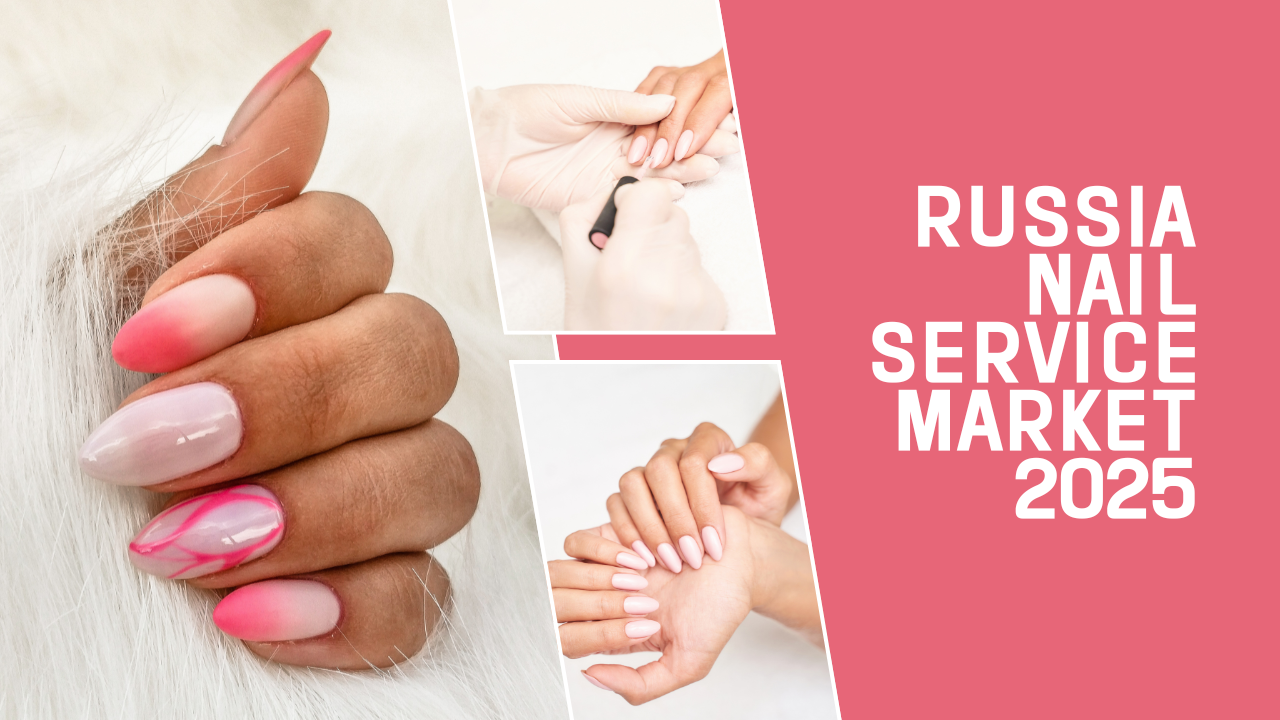
<Image taken by the author>
Russia Nail Services Market Overview
The nail services industry in Russia was severely impacted by the COVID-19 pandemic. Between 2020 and 2021, the market contracted by nearly 30% as thousands of salons closed their doors due to government restrictions and reduced consumer activity. However, since mid-2022, the market has shown signs of recovery. According to 2GIS, the number of nail salons in Russia increased by 8.8% between July 2022 and July 2023, reaching approximately 33,000 establishments.
Russian nail salons are typically categorized into three types: nail rooms, nail bars, and full-service nail salons. Nail rooms operate in small rented spaces within beauty salons or shopping centers and usually offer limited services due to space constraints. Nail bars, often located in shopping malls, provide quick services but may compromise privacy. In contrast, full-service salons provide comprehensive offerings—including manicure, pedicure, spa treatments, and nail extensions—with specialized staff. Their clientele often consists of middle- to high-income consumers.
The standard services offered across Russian salons include classic manicure and pedicure, gel polish applications, nail extensions, strengthening treatments, and spa therapies. On average, a customer spends between 30 minutes and 90 minutes per visit. By early 2024, the average spending per customer had risen to 1,130 rubles (around USD 12.1), reflecting a 28.1% increase compared to 2019.
Key Consumer Trends in the Russia Nail Services Market
Consumer demand is driving the expansion of the Russia Nail Services Market, especially as beauty services regain popularity post-pandemic. According to Profi, 52% of residents in Russian cities with populations above one million regularly use professional services such as hairdressing and nail care, with 82.5% of women identifying manicures as the most popular salon service.
However, rising costs pose challenges. RIA Novosti reported that in 2023, the cost of health and beauty services in Russia increased by an average of 21%, driven by higher product and labor costs. Despite this, salon owners often struggle to increase prices due to fierce competition and the risk of losing clients to cheaper alternatives.
Another noteworthy trend is the growing participation of male consumers. While men account for less than 5% of salon customers today, their presence is increasing. Corporate guidelines from major employers like Alfa-Bank and Russian Railways now emphasize personal grooming for both male and female employees, further normalizing nail care among men.
Fitmost, a subscription-based wellness platform, reported a nearly 300% increase in male bookings for nail services. As a result, more salons are hiring male-focused nail artists to meet demand.
Russia Nail Products Market Dynamics
The Russia Nail Services Market is deeply interconnected with product supply and availability. The Russia-Ukraine conflict, combined with sanctions from Western nations, led to a sharp increase in product costs. Many established Western nail brands exited the Russian market, forcing salons to seek alternatives. As a result, products from Russia, China, and South Korea have gained significant traction.
Chinese products, in particular, dominate due to their affordability and reliable supply chains. However, consumer perceptions about quality and safety remain mixed. Simultaneously, Russian manufacturers are beginning to develop in-house brands. Popular domestic names include Monami Professional, Biotech, Nika Nagel, and Seven Tones. These brands are slowly replacing imports and building loyalty among Russian salons.
The demand for gel polish is especially strong. Gel products offer durability, shine, and creative flexibility, making them increasingly popular despite rising prices. To counter inflationary pressures, salons and consumers are turning to more affordable Russian and Chinese options.
Consumer Preferences by Age Group
Preferences in the Russia Nail Services Market vary across age groups. Women under 22 tend to favor bright or pastel shades, often experimenting with colorful designs. Those between 23 and 30 prefer classic styles but are open to innovative products and new designs. Women over 30 generally prefer timeless looks, with many showing heightened interest in nail care and hand treatment products.
Statista’s 2021 survey of over 1,000 Russian women found that 22% used manicure products weekly, while 38% owned between three and five nail care items. Product durability ranked as the most important factor for 70% of respondents, followed by color variety (63%), price (56%), and brand reputation (30%). Interestingly, 55% of respondents reported spending less than 2,000 rubles (about USD 22) annually on nail products.
Import and Export Dynamics
Russia’s nail product imports totaled USD 27.64 million in 2023, representing a 3% year-on-year decline and a 26% decrease compared to 2021. China accounted for nearly 30% of total imports, maintaining its dominance. Interestingly, despite being classified as an “unfriendly” country, South Korea’s exports to Russia surged by 81.1% in 2023. Germany also saw a 12.4% increase. Conversely, imports from Türkiye dropped by 46.2%.
Under Russian customs regulations, nail products classified under HS Code 330430 are subject to a 6.5% import duty. Products containing alcohol must also pay an excise tax of 643 rubles (USD 6.9) per liter of pure alcohol. Additionally, value-added tax (VAT) is set at 20%.
South Korea remains an important partner, with exports of manicure and pedicure products to Russia reaching USD 730,000 in 2023. Nail enamel accounted for nearly 70% of this figure, while other nail care items represented 30%.
Competitive Landscape
According to Statista, the most recognized nail brands in Russia as of 2021 included Maybelline, ORLY, Limoni, Naillook, and Artdeco. While Western brands traditionally dominated, the current geopolitical climate has opened doors for Asian competitors. Online marketplaces such as Ozon and Wildberries now feature Korean and Chinese brands at the top of sales rankings.
Gel curing lamps, an essential tool for gel nail services, are also primarily imported from Asia. This further underscores the reliance of the Russia Nail Services Market on Asian suppliers.
Market Implications and Opportunities
Several implications emerge for the Russia Nail Services Market:
1. Shifting Consumer Behavior – As men increasingly adopt nail care and younger consumers experiment with bold designs, market segmentation and tailored products will become key growth strategies.
2. Franchise Expansion – Post-pandemic competition has spurred consolidation, with many salons joining franchise chains to ensure stability and branding.
3. Rise of At-Home Nail Care – During the pandemic, many consumers turned to DIY gel nail kits and lamps. This trend continues, creating demand for affordable home-use products.
4. Increased Role of Asian Brands – With Western exits, brands from South Korea and China are poised to capture more market share. Their affordability, product diversity, and adaptability align with consumer demand.
5. Regulatory Challenges – Exporters must navigate compliance with TR CU 009/2011 safety standards, while financial sanctions pose additional risks. Companies must confirm whether Russian banks can process foreign transactions.
Final Insights
The Russia Nail Services Market in 2025 demonstrates both resilience and adaptability. Despite economic challenges, inflation, and geopolitical disruptions, demand for nail services remains strong. As salons expand, male customers grow in number, and at-home care gains traction, opportunities are emerging for both local and international players.
Asian brands, particularly from Korea and China, are strategically positioned to thrive, provided they maintain product quality, build consumer trust, and comply with regulatory frameworks. Ultimately, companies that align with evolving consumer expectations and adapt to shifting market conditions are likely to secure long-term success in the Russian beauty landscape.
Learn More
Mongolia Nail Market 2026 Report
Russia Cosmetics Market Trend 2025
Romania Basic Cosmetics Market Trends 2025
Uzbekistan Color Cosmetics Market 2025 Report
Method & Source Notes
This report synthesizes market observations from public trade and industry sources (e.g., national statistics, trade offices, and syndicated market research). Duplicate or overlapping content from earlier drafts has been consolidated into a single cohesive narrative. Comparative insights from other emerging markets are added to clarify what is unique about the Russia Nail Services Market.
Disclaimer
This report is based on publicly available data, including Statista, RIA Novosti, Profi, 2GIS, KOTRA Vladivostok Trade Office, and other verified sources. It is intended for informational purposes only and does not constitute legal, financial, or investment advice
Note
Ads shown on this page are automatically served by Google AdSense and are not related to affiliate content.