
Written by Luna Jade – Global K-Beauty & Market Analyst with over 10 years of experience tracking Asian beauty innovations and consumer behavior, including the latest China Body Care Market Trends.
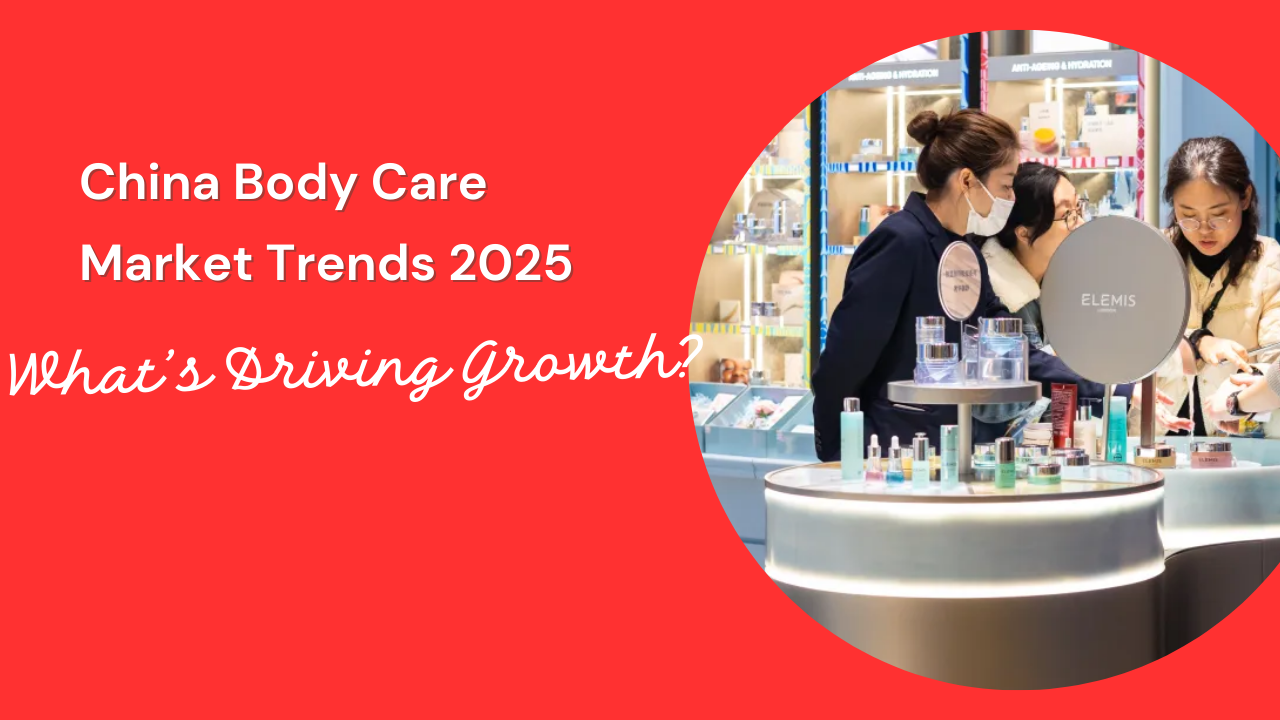
The body care industry in China has emerged as one of the most promising growth areas within the broader beauty sector. In the past, Chinese consumers often prioritized facial skincare over body products. However, this balance is shifting. Increasingly, consumers are embracing hand creams, body lotions, and fragrance-based wellness products. At the same time, gifting practices and regulatory reforms are shaping demand and supply dynamics. This comprehensive report examines China Body Care MarketTrends in 2025, drawing on consumer surveys, retail case studies, and government policy updates.
Market Landscape and Growth Momentum
Overall Market Size
According to the 2025 Scientific Cleansing and Care Consensus Report by Qingyan Research, the Chinese body care market reached 62.54 billion RMB (USD 12.5 billion) in 2024, reflecting strong year-on-year growth.
| Segment | 2024 Market Size (RMB) | Growth | Key Categories |
| Cleansing | 22.72 billion | -0.9% | Body wash, scrubs, soaps |
| Care | 39.87 billion | +30.9% | Lotions, creams, oils, hand products |
| Total | 62.54 billion | +18% overall | Growth led by care |
Table 1. China Body Care Market Overview (2024)
While cleansing products such as body washes and soaps slightly declined, care-focused items surged. This divergence highlights the consumer shift toward advanced functions like hydration, anti-aging, and whitening.
Rising Share of Care Products
Care products now account for over 63% of the total body care market. This shift indicates a maturing industry where body care is moving closer to the sophistication traditionally associated with facial skincare. As a result, China Body Care Market Trends clearly point to premiumization and expanded product innovation.
Consumer Demographics and Preferences
Gender and Age Distribution
A Qingyan Intelligence survey of 1,272 respondents revealed that:
- 60% were women, while 39.9% were men.
- 31–40-year-olds (42.8%) represented the largest share, followed by 26–30-year-olds (30.4%).
This demographic profile shows that body care is popular among young urban professionals with disposable income.
City Tiers and Income Levels
Demand is not limited to Tier-1 cities such as Shanghai and Beijing. Instead:
- 37.6% of respondents were from third-tier or lower cities.
- 28.1% lived in new first-tier cities like Chengdu, Suzhou, and Hangzhou.
- Income distribution was concentrated between 100,000–150,000 RMB annually, with 18.3% reporting 80,000–100,000 RMB.
This suggests that the consumer base extends deep into China’s urban hierarchy, broadening the opportunity for nationwide market penetration.
Product Usage Habits
Daily routines increasingly include body care. Key adoption rates include:
- Body wash (73.9%)
- Hand cream (63.2%)
- Body lotion (60.1%)
- Lip care (36.5%)
- Tone-up creams (31.8%)
- Neck care (30.5%)
These findings show how China Body Care Market Trends are evolving from niche indulgence to everyday essentials.
Functional Priorities: Beyond Basic Hydration
Consumer-Driven Needs
When evaluating purchase drivers, 80% of consumers prioritized functionality, while 64.2% valued ingredients. Moisturization remains the most demanded function, but whitening, acne care, and anti-aging are gaining momentum.
| Functional Priority | % of Respondents |
| Moisturization | 77.4% |
| Acne & Trouble Care | 59.1% |
| Whitening | 56.0% |
| Skin Regeneration | 54.4% |
| Cleansing | 54.4% |
| Anti-aging | 50.6% |
| Nutritional Supply | 43.4% |
| Sensitive Skin Relief | 27.7% |
Table 2. Functional Needs in Body Care Consumption
Whitening Ingredients
Ingredients such as niacinamide, arbutin, tranexamic acid, and phenylethyl resorcinol (377) dominate this category. Products like OLAY’s “Super White” lotion exemplify how facial skincare components are being repurposed for body care.
Anti-Aging Solutions
L’Oréal’s use of Pro-Xylane and peptide complexes in body lotions demonstrates how anti-aging science is expanding beyond the face. The popularity of these ingredients reflects consumer readiness for premium, long-term skin health investments.
Acne and Sebum Control
With body acne emerging as a concern, salicylic acid and AHA-based washes have grown in popularity. This aligns with the younger demographic’s desire for multifunctional care addressing both cosmetic and dermatological needs.
Emotional Care and the Power of Fragrance
The Shift Toward Emotional Wellness
Modern consumers do not only seek performance; they also desire emotional relief. Social platforms highlight terms such as “immersive skincare” and “emotional care”, suggesting that body care is now intertwined with mental well-being.
Fragrance-Driven Experiences
Scents are no longer supplementary but central to the body care proposition. Chinese consumers increasingly select fragrances for mood enhancement:
- Woody tones (sandalwood, cedar) for calmness.
- Floral and citrus for freshness.
- Oriental blends (gardenia, cinnamon) for cultural familiarity and comfort.
Local Brand Strategies
Domestic brands emphasize natural scents and Oriental accords. Gardenia, cinnamon, and sandalwood are seeing rapid adoption. Their success illustrates how China Body Care Market Trends embrace both global and localized influences.
Gift Culture and Market Differentiation
Role of Gifts in Social Life
In China, small gifts are vital in both professional and personal interactions. Body care products such as hand creams have become highly practical options, valued for affordability and emotional resonance.
Case Studies: City-Exclusive Editions
Brands like Qingzhi (青稚) and Chunxian (春弦) launched hand creams featuring “Shanghai Limited” or “Nanjing Limited” packaging. These editions often include local landmarks or cultural motifs, transforming everyday items into collectible souvenirs.
Seasonal Collections and Customization
- 365 Birth Flower Hand Creams offer a different scent for each day of the year.
- Zodiac- and festival-themed products attract attention during holidays such as Valentine’s Day and Qixi Festival.
Such innovations highlight how gifting practices and personalization are inseparable from China Body Care Market Trends in 2025.
Regulatory Environment
Implementation of CSAR
The Cosmetics Supervision and Administration Regulation (CSAR), enacted in January 2021, has significantly reshaped compliance requirements:
- Appointment of local responsible companies.
- Ingredient registration and pre-approval for functional claims.
- Standardized packaging and Chinese-language labeling.
Implications for Body Care
While regulations are slightly less strict for body care compared to facial products, companies must remain compliant. Even small oversights in labeling or claims can delay market entry.
Therefore, brands looking to enter or expand must integrate regulatory compliance into product design and marketing strategies.
Brand Case Studies: The Rise of Specialized Stores
Qingzhi (青稚)
Founded in 2020, Qingzhi specializes in hand creams. By 2024, it expanded to over 100 stores nationwide, focusing on tourist hotspots like Shanghai’s Tianzifang and Beijing’s Wangfujing.
Lichiu (荔秋) and Chunxian (春弦)
Launched in 2024, these brands quickly scaled to 50 and 10 stores, respectively. Each brand employs a distinct color palette to strengthen identity, such as Morandi Blue or light green.
Marketing Innovations
Brands frequently release limited-edition packaging tied to festivals or local culture. They also incorporate collectible stamps at stores, encouraging young consumers to engage in stamp-collecting tourism.
These creative strategies reflect the cultural depth of China Body Care Market Trends, merging functionality with lifestyle experiences.
Strategic Insights for Global and Local Players
Ensure Regulatory Compliance
Adapting early to CSAR guidelines will minimize delays and foster consumer trust.
Prioritize Functionality
Consumers demand scientifically validated benefits like whitening, anti-aging, and acne care.
Innovate in Fragrance
Emotional wellness is a key differentiator; fragrance must be central to product development.
Leverage Gifting Culture
City-specific packaging and festival editions can enhance relevance and emotional connection.
Final Insights
China’s body care market is undergoing a fundamental transformation. No longer defined solely by moisturization, the industry now blends advanced functions, fragrance-driven emotional value, and cultural relevance. With an expanding consumer base across city tiers and a market size exceeding 62 billion RMB, opportunities abound for brands willing to adapt. China Body Care Market Trends in 2025 demonstrate that the future of beauty lies not only in science but also in cultural storytelling and emotional resonance.
Similar Reports:
China Home Beauty Device Market 2025
Inside the China Vegan Beauty Market 2025
Method & Source Notes
This article is based on data and insights from:
- Qingyan Research (2025 Scientific Cleansing and Care Consensus)
- Qingyan Intelligence Consumer Survey (1,272 respondents)
- Xiaohongshu (小红书) user insights
- KOTRA Nanjing Trade Office interviews
- Market analysis from 36Kr, Alibaba Consumer Insights, Sohu, Zhizhuan GI, and Yi Eun Marketing Intelligence
Disclaimer
This report is intended for informational and journalistic purposes. It does not constitute medical advice, product promotion, or direct sales content. All sources are cited to ensure transparency and originality.
Note
Ads shown on this page are automatically served by Google AdSense and are not related to affiliate content.