
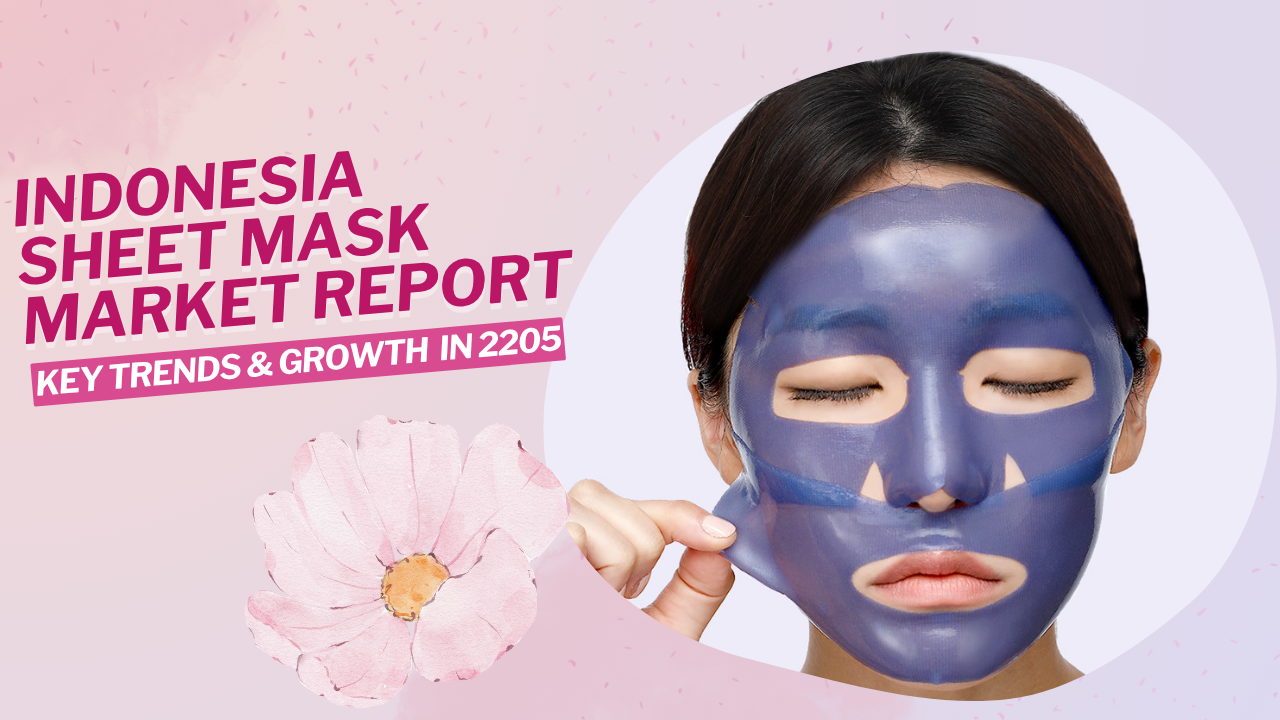
By Luna Jade | Beauty Industry Analyst (10+ yrs) reporting on the Indonesia Sheet Mask Market.
Executive Summary
The Indonesia Sheet Mask Market is undergoing a structural transformation driven by shifting consumer expectations, social-media education, and expanding regulatory demands. Although skincare remains one of Indonesia’s fastest-growing beauty categories, the sheet mask segment shows signs of both consolidation and innovation. This report analyzes evolving consumer behavior, digital influence, local competition, import shifts, and the rising regulatory burden shaped by BPOM and Halal certification. Furthermore, it highlights opportunities for Korean brands navigating Southeast Asia’s most dynamic beauty landscape.
The insights in this article draw on verified market data from Statista, Indonesia Statistics, and official trade reports. Additional qualitative findings reference consumer behavior, e-commerce dynamics, and distribution patterns documented through KOTRA Surabaya’s market notes
As Indonesia’s economy continues to grow and digital penetration deepens, sheet masks remain a staple for hydration and convenience, although competitive forces have intensified.
Indonesia’s Expanding Skincare Ecosystem
Indonesia remains one of the most influential beauty markets in Southeast Asia. Demand for skincare continues to strengthen as consumers learn more about routines, ingredients, and preventive care. According to Statista, Indonesia’s skincare market is projected to reach 2.94 billion USD by 2025 with further growth through 2030. Meanwhile, the Indonesia Sheet Mask Market is expected to generate 43.74 million USD over the 2025–2029 period with a modest but steady CAGR of 0.54 percent.
Several underlying factors contribute to this momentum. First, rising disposable income is enabling consumers to try more skincare categories, including sheet masks, exfoliators, and targeted serums. Second, e-commerce has made international products more accessible. Third, the cultural importance of self-care has intensified, particularly after COVID, when routine-based skincare became a psychological comfort and a daily ritual.
Moreover, Indonesia’s young demographic fuels demand for skincare content and experimentation. With more than 60 percent of the population under 35, the market naturally gravitates toward digital-first discovery and product testing. As a result, sheet masks occupy a unique position: they are affordable, easy to use, visually appealing for social content, and instantly gratifying.
Social Media’s Outsized Influence on the Indonesia Sheet Mask Market
Beauty Content and the Rise of Skincare Education
Indonesia’s digital landscape is among the most active in the world. Platforms such as TikTok and Instagram function not only as entertainment spaces but also as real-time education hubs. Consumers search for “best sheet masks,” “safe ingredients,” “oily skin routine,” and “hydrating masks” daily. Therefore, creators have become key intermediaries between brands and customers. Their content shapes not only awareness but also purchase decisions.
Furthermore, TikTok’s algorithm rewards authentic, high-engagement content. When a sheet mask gains traction—often through before-and-after videos—sales can spike within hours. Because of this, brands invest heavily in micro-influencers who are perceived as more relatable and trustworthy.
Influence of Dermatologists and Medical Professionals
Although influencers remain influential, dermatologists increasingly guide consumer choices. Their content focuses on ingredient science, addressing questions such as:
- Does niacinamide cause purging?
- Are sheet masks safe for acne-prone skin?
- How often should sheet masks be used in Indonesia’s climate?
This scientific communication reduces misinformation and fosters more cautious consumer behavior. As a consequence, customers now evaluate sheet masks using criteria that go beyond packaging aesthetics and fragrance.
Post-Pandemic Shifts in Content Priorities
The pandemic redefined beauty priorities worldwide. In Indonesia, consumers gravitated toward functional benefits such as soothing, moisturizing, brightening, and oil control. As a result, sheet masks are increasingly judged by ingredient lists, texture, and real-world results rather than marketing slogans. Moreover, content trends encourage “evening self-care routines,” where sheet masks are positioned as essential for calming the skin after a long day.
Ingredient Awareness and Evolving Consumer Preferences
Indonesia’s tropical climate contributes to widespread oily skin types. Therefore, sheet masks designed for hydration without heaviness perform exceptionally well. Ingredients such as centella asiatica, hyaluronic acid, green tea, and tea tree remain popular. Conversely, consumers increasingly avoid parabens, artificial fragrances, and harsh preservatives.
Moreover, consumers value ingredient transparency. A major controversy in 2024 revealed discrepancies in active ingredient percentages, causing distrust among customers. After one dermatologist shared lab test results showing significantly lower niacinamide levels than advertised, consumers demanded higher manufacturing integrity. Consequently, both brands and OEM manufacturers now face heightened scrutiny regarding formulation accuracy, label clarity, and safety testing.
Because sheet masks are viewed as a quick and convenient treatment, they must deliver real benefits without irritation. Therefore, brands leaning on dermatology-backed claims tend to build stronger trust.
Market Competition and Rapid Shifts Across Price Segments
The Indonesia Sheet Mask Market has diversified significantly due to intense competition across price tiers.
Low-Price Segment – Mass Appeal and Volume Growth
BIOAQUA dominates the affordable category, often selling millions of units through TikTok Shop. Its highly visible marketing strategies and tactical partnerships with micro-influencers accelerate reach and conversion. Moreover, its aggressive pricing makes it attractive to younger consumers who seek routine-friendly products without financial strain.
| Product Name | Price |
| Bioaqua Sakura Niacinamide Brightening Mask | Indonesia Rupiah 2,900 (USD 0.17) |
| Bioaqua Sophora Ceramide Moisturizing Antioxidant Mask | Indonesia Rupiah 3,500 (USD 0.21) |
| Bioaqua Coffee Bean Anti-Oxidant & Tender Facial Mask | Indonesia Rupiah 2,900 (USD 0.17) |
<Source: KOTRA Surabaya Trade Office>
SOMEBYMI maintains popularity due to its Miracle Toner legacy. The brand’s sheet masks, available both in single packets and “pull-out” tubs containing 30 sheets, appeal to customers who prefer consistent daily usage.
| Product Name | Price |
| SOMEBYMI Real Care Sheet Mask | Indonesia Rupiah 8,400 (USD 0.51) |
| SOMEBYMI Galactomyces Glutathione Daily Mask (30 sheets) | Indonesia Rupiah 260,000 (USD 15.77) |
<Source: KOTRA Surabaya Trade Office>
Mid-Price Segment – Established Korean Brands
Mediheal’s longstanding credibility in global markets positions it as a trustworthy option for Indonesian shoppers seeking reliable hydration and calming effects. Because it is available in both online and offline channels, the brand enjoys steady visibility.
| Product Name | Price |
| Mediheal The I.P.I Brightening Ampoule Mask | Indonesia Rupiah 19,500–30,000 (USD 1.18–1.82) |
| Mediheal Collagen Essential Mask | Indonesia Rupiah 19,500–27,000 (USD 1.18–1.64) |
<Source: KOTRA Surabaya Trade Office>
Premium Segment – Niche Appeal and High Engagement
Hydrogel masks by Biodance capture consumer curiosity with their advanced texture and premium feel. Although priced higher, they satisfy demand among skincare enthusiasts who enjoy experiential formats. In contrast, Dr. Jart+, backed by Estée Lauder’s local subsidiary, reinforces its premium status through Sephora and consistent brand communication.
| Product Name | Price |
| Biodance Bio-Collagen Real Deep Mask (1 pc) | Indonesia Rupiah 49,999 – IDR 59,000 (USD 3.03 – 3.58) |
| Biodance Hydro Cera-nol Real Deep Mask (1 pc) | Indonesia Rupiah 43,900 – IDR 59,000 (USD 2.66 – 3.58) |
| Dr. Jart Porecting Solution | Indonesia Rupiah 69,000 (USD 60.61) – per sheet |
| Dr. Jart Vital Hydra Solution | Indonesia Rupiah 69,000 (USD 60.61) – per sheet |
<Source: KOTRA Surabaya Trade Office>
Decline of Imported Korean Sheet Masks
Despite K-Beauty’s continued global influence, Korea’s sheet mask imports into Indonesia dropped significantly in 2022 from 37.17 million USD to 20.61 million USD. Several forces contributed to this decline:
- Rising domestic beauty brands offering competitive pricing
- Chinese brands flooding the market with low-cost alternatives
- Increased ingredient scrutiny making consumers cautious
- Local manufacturing improvements raising quality standards among Indonesian brands
Moreover, Indonesian customers increasingly appreciate locally produced skincare, which they perceive as better suited to their climate and budget. Nevertheless, Korea still retains aspirational power, meaning K-Beauty remains influential even if market share fluctuates.
Regulatory Changes Reshaping the Indonesia Sheet Mask Market
BPOM’s Expanding Enforcement
BPOM registration is essential before any sheet mask enters the Indonesian market. Required documents include:
- GMP certificate
- Certificate of Free Sale
- Ingredient list and percentages
- Product dossier
- Letter of Appointment (LoA) between exporter and importer
Because BPOM closely examines active ingredients and labeling accuracy, brands must ensure complete documentation and safety validation. Failure to comply results in delays or market entry restrictions.

<Source: BPOM Homepage>
Mandatory Halal Certification by 2026
Starting October 2026, Halal certification becomes compulsory for cosmetic products. Although Indonesia has signed mutual recognition agreements with a few global bodies, only two Korean certification organizations are approved. Therefore, exporters must prepare documentation early to avoid delays.
Moreover, Halal certification now extends beyond ingredients to include manufacturing processes, packaging, and supply chain verification. Consequently, brands must collaborate closely with their OEM partners to maintain compliance.

<Source: Hala Indonesia homepage>
Import Tariffs and Market Access
Under IKCEPA, sheet masks from Korea benefit from a 0 percent import tariff, offering a strong competitive advantage compared to other international brands. However, because BPOM registration ties a product to a single importer, contractual safeguards are critical. Brands must ensure pricing, ownership rights, and distribution responsibilities are clearly defined.
Distribution Patterns and Consumer Accessibility
1.Online Channels Driving Market Penetration
Shopee, TikTok Shop, and Tokopedia remain dominant distribution channels. Livestream shopping continues to grow rapidly, with hosts demonstrating sheet mask usage and promoting time-limited deals. Moreover, online platforms make it possible for brands to reach thousands of islands across Indonesia without establishing local warehouses.
2. Offline Retailers Supporting Premium Brands
Sociolla, Guardian, and Watsons represent trusted beauty retailers where premium or mid-priced sheet masks often sell best. Their physical presence provides credibility and allows consumers to compare products in person.
3. Reseller Ecosystems
In Indonesia’s archipelagic geography, resellers act as critical intermediaries connecting brands to remote areas. Because they take on inventory risk, they effectively support market expansion for both small and large brands.
Market Outlook and Strategic Recommendations
The Indonesia Sheet Mask Market will remain competitive but full of opportunity. As consumers grow more informed, they expect formulations that balance efficacy, safety, and transparency. Moreover, regulatory pressure ensures consistent product quality and encourages brands to follow international manufacturing standards.
For Korean and global brands entering the market, success will depend on:
- Optimizing e-commerce visibility through TikTok and Shopee
- Aligning formulations with Indonesia’s oily-skin majority
- Ensuring early compliance with Halal and BPOM requirements
- Building long-term partnerships with capable importers
- Offering strong digital storytelling backed by ingredient science
Although competition is intense, Indonesia’s large population, digital adoption, and strong skincare culture will sustain long-term growth. Brands capable of adapting to regulatory changes and evolving consumer expectations will secure meaningful market share.
Related Report:
Malaysia Cosmetic Export and NPRA Regulations
Inside the Indonesia Color Cosmetics Market 2025 Report
Methodology & Source Notes
This report is based on market data from Statista, Indonesia Statistics, TradeMap, and ASEAN regulatory documents. Additional insights are supported by KOTRA Surabaya Trade Office’s findings and publicly available reports on consumer behavior and distribution dynamics. All interpretations, restructuring, and analysis were independently conducted by Kbrands.biz to ensure originality and maintain editorial independence.
Editorial Disclaimer
This report is provided for informational and analytical purposes only. It does not constitute legal, regulatory, or professional compliance advice. Readers should verify all requirements directly with Indonesian authorities such as BPOM, Halal certification bodies, and qualified import partners. Regulatory conditions may change as new updates become available.
Advertising Disclosure
Display ads on this page are automatically served through Google AdSense. Advertising placement does not influence editorial content, market analysis, or reporting decisions. Kbrands.biz maintains full independence in its research and publishing activities.