
Author: John Lee is a global beauty industry analyst focusing on international cosmetics trade and emerging skincare trends. His research frequently explores the growth of K-beauty in India, global K-beauty expansion, and cross-border opportunities for Korean skincare brands.
Executive Summary
India’s beauty and personal care industry is entering a new phase of expansion that is attracting global attention. While many established beauty markets are experiencing slower growth, India continues to show strong momentum across multiple product categories. Industry analysts increasingly view the country as one of the most dynamic beauty markets in the world.
At the same time, K-beauty in India is gaining stronger visibility among both consumers and importers. Korean skincare products are widely associated with ingredient innovation, advanced formulations, and modern skincare routines. As global cultural trends continue to influence consumer behavior, Korean cosmetics have become part of a broader international beauty conversation.
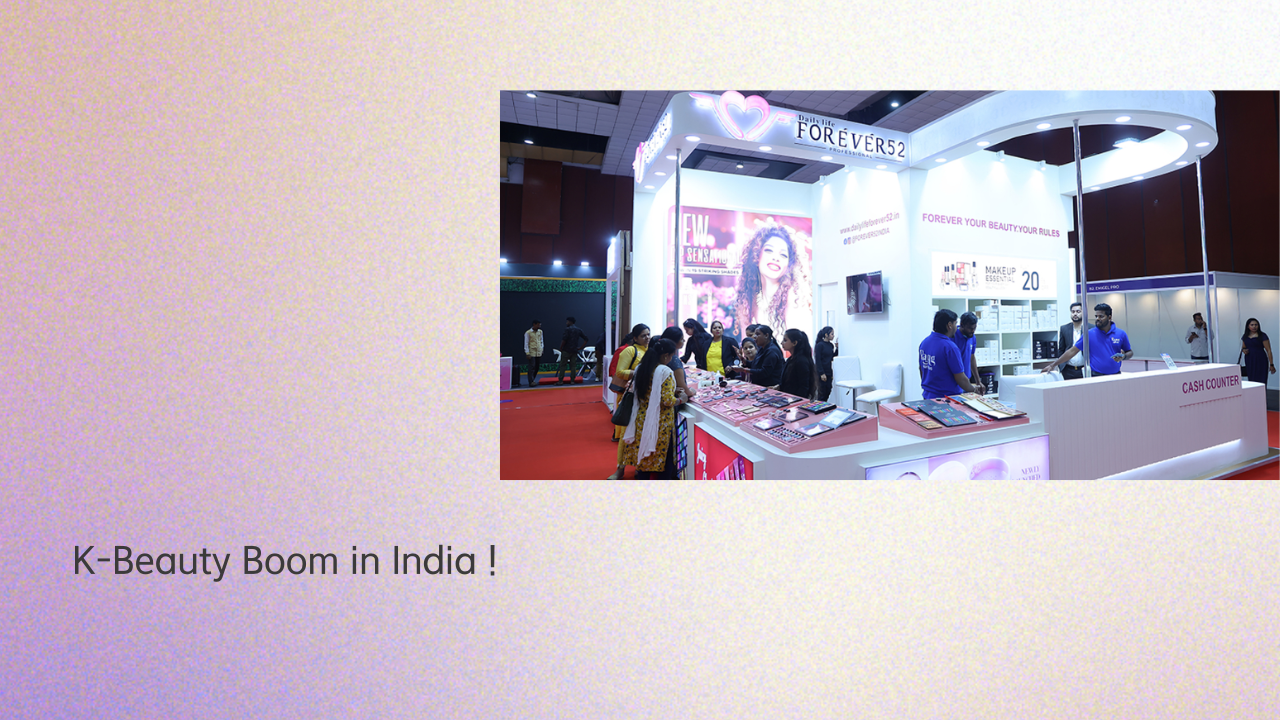
Cosmoprof India 2025 provided a valuable opportunity to examine these changes more closely. The exhibition brought together beauty brands, distributors, and industry professionals from around the world. Importer interviews and survey insights collected during the event provide a clearer understanding of how international beauty companies view the Indian market.
This report analyzes the key market drivers shaping India’s beauty sector, the growing reputation of Korean cosmetics, and the role of global trade exhibitions in supporting industry expansion. In addition, it explores how K-beauty in India reflects broader shifts in consumer preferences, digital beauty culture, and international cosmetics trade.
India Beauty Market Growth
Market Size and Industry Forecast
The global beauty and personal care industry has experienced steady growth over the past decade. However, many mature markets have reached relatively stable growth levels. In North America, Western Europe, and Japan, annual expansion often ranges between zero and five percent.
India presents a different trajectory. Market projections suggest that the country’s beauty and personal care industry could grow at approximately 10 to 11 percent annually between 2023 and 2028. Such growth places India among the fastest-expanding beauty markets globally.
(Unit: USD billion)

<Source: IBEF>
Industry research estimates that the Indian beauty sector reached around USD 28 billion in 2024, with forecasts suggesting it could approach USD 34 billion by 2028. This expansion reflects several long-term structural changes within the country.
Rising disposable income has increased purchasing power among urban consumers. At the same time, expanding retail infrastructure has improved product accessibility. Beauty retailers, lifestyle malls, and specialized cosmetics stores have grown rapidly across major Indian cities.
Moreover, digital commerce has transformed how consumers purchase beauty products. Online marketplaces allow consumers across both urban and semi-urban regions to access international brands more easily than before.
These structural developments have created favorable conditions for international cosmetics brands seeking market entry.
Key Drivers of Consumer Demand
Several factors are driving sustained growth in the Indian beauty sector.
First, demographic dynamics strongly influence the market. India has one of the youngest populations globally. Younger consumers often experiment with skincare products and adopt new beauty routines earlier than older generations.
Second, digital connectivity has significantly changed beauty consumption patterns. Social media platforms such as YouTube, Instagram, and short-form video channels have become major sources of beauty education. Consumers frequently rely on influencer reviews and skincare tutorials before making purchasing decisions.
Third, lifestyle transformation is shaping consumer habits. As urbanization expands, skincare and grooming routines have become part of daily self-care practices rather than occasional purchases.
Finally, consumers increasingly prioritize ingredient transparency and skin health. This shift toward ingredient-focused skincare has created favorable conditions for brands emphasizing scientific formulations and dermatological research.

<Source: Nykaa Beauty Trends Report 2024>
The Rise of K-Beauty in India
Cultural Influence and Global Media
One major factor supporting the expansion of Korean cosmetics is the global influence of Korean culture. Over the past decade, Korean entertainment has developed a strong international presence.
K-pop music, television dramas, and streaming content have attracted significant audiences in many countries, including India. Streaming platforms have increased accessibility to Korean entertainment content, which frequently showcases Korean skincare routines and beauty culture.
As a result, younger consumers have become more familiar with Korean lifestyle trends. This cultural exposure has helped strengthen awareness of Korean cosmetics brands.
Consequently, K-beauty in India has increasingly become associated with innovation, gentle formulations, and modern skincare routines.
Younger Consumers and Skincare Culture
Consumer interviews suggest that younger demographics play a crucial role in shaping demand for Korean skincare products.
Among Indian consumers, the 26-to-35 age group represents the largest demand segment for international skincare brands. The 15-to-25 age group follows closely behind.
These consumers are highly connected through digital platforms. They regularly explore skincare trends through social media, beauty influencers, and global lifestyle content.
Because Korean skincare routines often emphasize hydration, ingredient layering, and long-term skin health, many younger consumers find these approaches appealing.
In this context, the rising popularity of K-beauty in India reflects both cultural influence and evolving consumer expectations regarding skincare science and product innovation.
Cosmoprof India: Industry Platform
Cosmoprof India has become one of the most influential professional beauty trade events in South Asia.
Since its launch in 2019, the exhibition has expanded rapidly and attracted international attention. The event provides a meeting point for global beauty brands, distributors, suppliers, and market analysts.
The 2025 exhibition covered approximately 24,000 square meters of exhibition space and featured 353 exhibitors from 23 countries representing roughly 800 beauty brands.
In addition, industry organizers expected more than 14,000 professional visitors to attend the event.

<Source: Cosmoprof India Homepage>
National pavilions from countries including Australia, Brazil, Germany, Italy, Korea, Taiwan, Spain, Indonesia, and the United Kingdom demonstrated the international character of the exhibition.
Trade events such as Cosmoprof play an important role in global beauty supply chains. They enable companies to showcase new products, identify distribution partners, and observe emerging market trends.
For Korean cosmetics companies, the event provided valuable insight into the evolving opportunities surrounding K-beauty in India.
Importer Survey Findings
Interest in Korean Cosmetics
During Cosmoprof India 2025, interviews and structured surveys were conducted with several beauty industry participants.
Among the respondents, five importers expressed interest in importing Korean products in the future, while two companies reported that they already import Korean cosmetics.
Participants showed strong interest in several product categories. Skincare products attracted the highest attention, followed by natural and organic cosmetics, fragrances, and general beauty products.
Potential importers also indicated interest in related sectors such as haircare products, beauty accessories, nail products, and spa solutions.
These findings indicate that K-beauty in India is increasingly viewed as a viable business opportunity within the country’s growing beauty ecosystem.
Consumer Demographics
Survey responses suggested that female consumers currently represent the largest share of demand for Korean cosmetics.
However, several interviewees observed that male consumers are also becoming more interested in skincare products.
In some segments, male and female participation levels are beginning to approach similar levels. This trend reflects a broader shift in the beauty industry, where skincare is increasingly viewed as gender-neutral.
As skincare becomes a routine part of daily personal care, the consumer base for Korean cosmetics may continue to expand.
Purchasing Decision Factors
Ingredient Safety and Transparency
One of the most consistent findings from importer interviews was the strong importance placed on ingredient safety.
Respondents emphasized that Indian consumers increasingly seek products with transparent ingredient lists and scientifically supported formulations.
Because many Korean skincare brands highlight ingredient innovation and dermatological research, importers believe these products align well with evolving consumer expectations.
This factor has contributed to growing interest in K-beauty in India, particularly within skincare segments focused on sensitive skin and hydration.
Brand Reputation and Product Effectiveness
Beyond ingredient safety, brand reputation and product performance also influence purchasing decisions.
Many importers associate Korean cosmetics with innovation and advanced skincare technology. Products that demonstrate visible skincare results tend to gain stronger consumer trust.
Packaging design, marketing support, and pricing strategies also play important roles in distribution partnerships. However, respondents generally considered product quality and brand credibility more important than promotional elements.
Certification requirements were viewed as neutral factors compared with product effectiveness and brand reputation.
Challenges in Importing Korean Cosmetics
Although the overall perception of Korean cosmetics remains positive, importers also identified several operational challenges.
Communication barriers were frequently mentioned. Differences in language or business practices can occasionally slow negotiations between Korean manufacturers and Indian distributors.
Another concern relates to MOQ requirements. Smaller distributors sometimes struggle to meet large production volumes when introducing new products to the market.
Regulatory compliance also represents an important factor. Importers must ensure that cosmetic products meet Indian regulatory standards and documentation requirements.
Despite these challenges, industry participants remain optimistic about the long-term potential of K-beauty in India, particularly as international partnerships continue to evolve.
Emerging Beauty Trends in India
Industry participants highlighted several product categories that could experience strong growth in the coming years.
Anti-aging skincare products remain highly popular among urban consumers. In addition, products designed to protect skin from pollution and environmental stress are gaining increasing attention.
Dermatology-inspired skincare products, often referred to as derma cosmetics, are also expanding rapidly. Consumers increasingly seek solutions that combine cosmetic benefits with skincare science.
Natural, organic, and clean beauty products continue to gain traction as well. Consumers are becoming more aware of sustainability, ingredient sourcing, and product safety.
Haircare products and beauty devices were also identified as emerging opportunities within the Indian market.
These trends suggest that skincare innovation and ingredient transparency will remain central themes shaping the future of K-beauty in India.
Market Implications for Korean Companies
The insights gathered during Cosmoprof India 2025 highlight the significant opportunities available within the Indian beauty market.
The country’s expanding beauty sector aligns well with several strengths of the Korean cosmetics industry, including research-driven product development, ingredient innovation, and advanced skincare formulations.
However, successful market entry will require careful adaptation to local conditions.
Companies must consider climate differences, consumer price expectations, and regulatory requirements when introducing products into the Indian market.
Flexible distribution strategies, collaborative marketing efforts, and localized product development could also strengthen partnerships with Indian distributors.
Ultimately, as consumer demand continues to evolve, the growth of K-beauty in India may become one of the most significant international expansion stories in the global cosmetics industry.
Related Report
U.S. Beauty Market 2026: K-Beauty 3.0 Skinimalism
Method & Source Notes
This report analyzes survey responses and interview insights collected during Cosmoprof India 2025. Industry participants included beauty importers, distributors, and cosmetics professionals attending the exhibition.
Additional market data referenced in this report were derived from publicly available industry sources, including international beauty market research, retail analysis, and trade statistics.
Editorial Disclaimer
This article is intended for informational and analytical purposes. Market insights and forecasts are based on available industry data and interview responses. Market conditions and regulatory frameworks may evolve over time.
Advertising Disclosure
Advertisements on this page are automatically served by Google AdSense and are not associated with affiliate or sponsored content.